
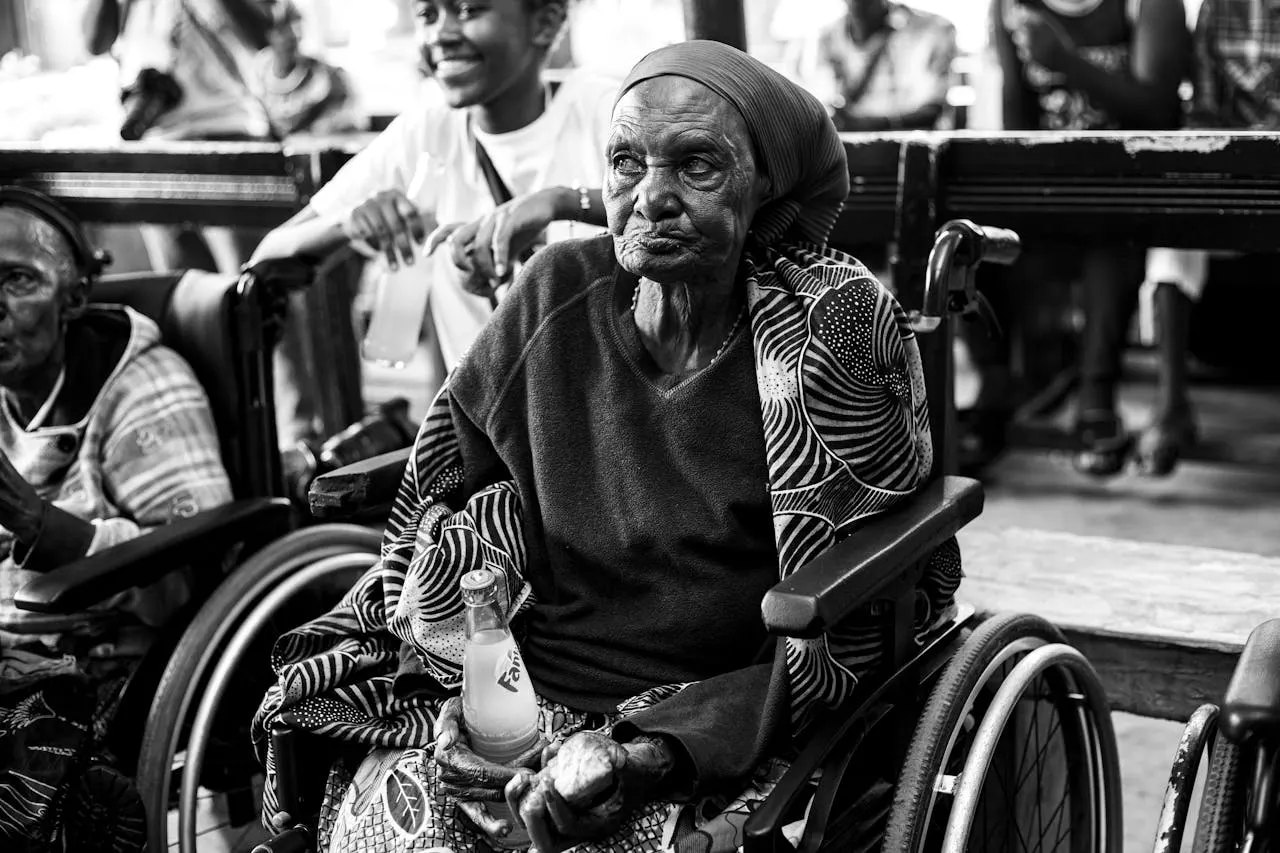
Why It Matters
Health is not a luxury. Financial ruin from illness is not inevitable.
The World Health Organization defines Universal Health Coverage as ensuring all people have access to quality health services without suffering financial hardship. It encompasses the full continuum — from health promotion to prevention, treatment, rehabilitation, and palliative care.
The economic case is unambiguous: every dollar invested in health generates returns of $2–4 in economic productivity in low-income settings, according to the Lancet Commission on Investing in Health. Countries that achieved UHC did not do so because they became rich — they became richer because they achieved UHC first.
In Burundi, a single uninsured hospitalization consumes on average 3–5 months of a rural household's income. The catastrophic expenditure threshold — defined by WHO as more than 10% of annual household consumption spent on health — is crossed by an estimated 14% of Burundian families every year. Our work exists to end that.
$2–4 return
Economic return per $1 invested in health in LMICs
Lancet Commission on Investing in Health, 2023
14% of households
In Burundi experience catastrophic health expenditure annually
WHO Health Expenditure Database
30% higher
School attendance rates in households with health insurance
World Bank Health Financing Studies
25% productivity gain
In agricultural output when rural workers have health coverage
ILO World Social Protection Report 2022
The Road to Health for All
Five decades of global commitment — accelerating toward 2030.
WHO Constitution
The WHO Constitution declares health "a fundamental right of every human being without distinction of race, religion, political belief, economic or social condition." This foundational document establishes the moral and legal basis for universal health coverage.
open_in_newRead the WHO Constitution →Alma-Ata Declaration
The International Conference on Primary Health Care in Alma-Ata, Kazakhstan, calls for "Health for All by the Year 2000" through primary health care. It establishes community health workers and preventive care as the foundation of health systems — the model Future Health builds on today.
open_in_newRead the Alma-Ata Declaration →Abuja Declaration
African heads of state pledge to allocate at least 15% of annual national budgets to health. As of 2023, fewer than 10 African countries have consistently met this target. Burundi allocates approximately 10% — below the commitment, but trending upward with NGO advocacy including Future Health's policy work.
open_in_newRead the Abuja Declaration →World Health Report — Health Systems Financing
WHO's landmark report defines the path to UHC: reduce out-of-pocket payments, expand prepayment and risk-pooling, and allocate public funds efficiently. Community-based health insurance (mutuelles de santé) is identified as a critical mechanism for extending coverage in low-income settings.
open_in_newRead the WHO 2010 Report →SDG 3.8 — Universal Health Coverage
The UN Sustainable Development Goals mandate universal health coverage by 2030. Target 3.8 specifically calls for coverage of essential health services and financial risk protection. Every Future Health program is designed, measured, and reported against this global benchmark.
open_in_newExplore SDG Goal 3 →UN High-Level Meeting on UHC
World leaders reaffirm the commitment to UHC and adopt a Political Declaration identifying community health workers, primary care, and health financing as the three pillars of accelerated progress. Future Health's model addresses all three simultaneously.
open_in_newView UN Declaration →Our Theory of Change
From household enrollment to systemic transformation.
Future Health does not deliver charity. We build systems. The mutuelles de santé model is our primary lever — but it works because it sits inside a broader theory of change designed for permanence, not dependency.
Our Progress Toward Health for All
Global Partners in UHC
Organizations shaping universal health coverage globally.
World Health Organization (WHO)
open_in_newThe UN's primary health agency — sets global standards, monitors UHC progress, and publishes the Global Health Observatory data used in our program evaluations.
World Bank Health
open_in_newTracks health expenditure, catastrophic spending, and out-of-pocket costs across 180+ countries. The World Bank's UHC data directly informs our coverage gap analysis.
ILO — Social Protection
open_in_newThe International Labour Organization's World Social Protection Reports document the gap between formal insurance and actual population coverage across low-income countries.
African Development Bank
open_in_newPrimary continental financier for health system strengthening. Their $66B/year financing gap estimate underpins our argument for expanded insurance program funding.
UHC2030 Partnership
open_in_newThe International Health Partnership for Universal Health Coverage — a multi-stakeholder platform coordinating governments, civil society, and development partners around SDG 3.8.
Partners in Health (PIH)
open_in_newPioneering community-based care model in Haiti and Rwanda that directly informed the mutuelles de santé approach Future Health implements in Burundi.
Health for All starts with one insured household at a time.
Enroll, partner, fund, or volunteer — every pathway advances universal health coverage in Burundi and beyond.